The 105th anniversary of the outbreak of the Greater Poland Uprising has just passed. This is one of only a few Polish uprisings that ended in victory. And the only one that, for such a large area of operations, fully achieved its goal – the annexation of these lands to Second Polish Republic in 1920.
The uprising began on December 27, 1918 in Poznań and officially ended on February 16, 1919 with an armistice in Trier (although there were still some fighting). So it was relatively short.
However, the intensity and effectiveness of military operations provided the basis for negotiating in the Treaty of Versailles the annexation to Poland of areas that could not be taken over by force of arms, e.g. Bydgoszcz.
I guess everyone who has read my entries now is waiting for the map 🙂
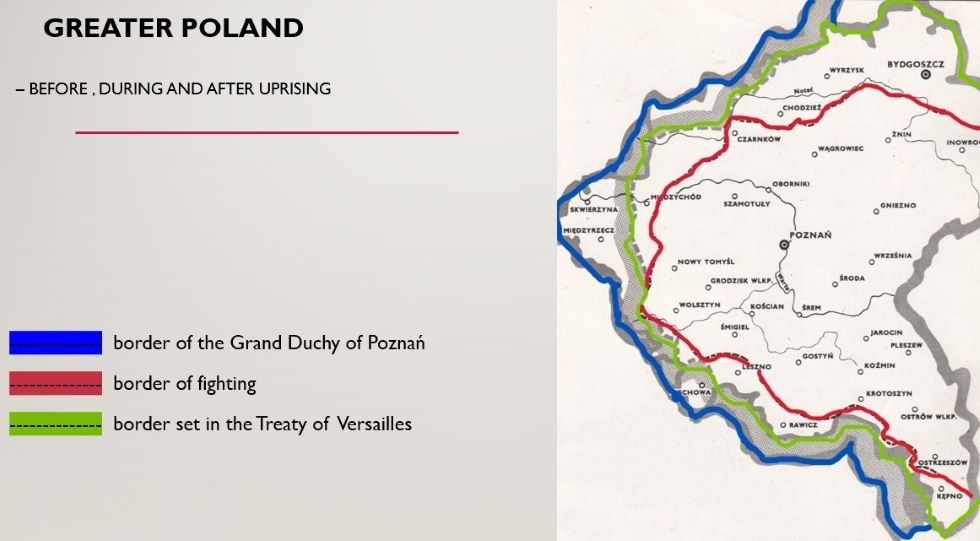
As you can see, although the Grand Duchy of Poznań (corresponding to the Posen province) was slightly larger than the areas granted to Poland, the area covered by insurgent activities was smaller than the obtained area.
Already in 1928, the first association of participants of this uprising was established, and soon there were several of those. They were responsible for commemorating the course of battles, establishing lists of insurgents, caring for the graves of the fallen and helping their families. Thanks to this, after World War II, most surnames of the insurgents could be verified. But it is still difficult to determine the exact list of the fallen and the places where they were buried.
http://powstancywielkopolscy.pl
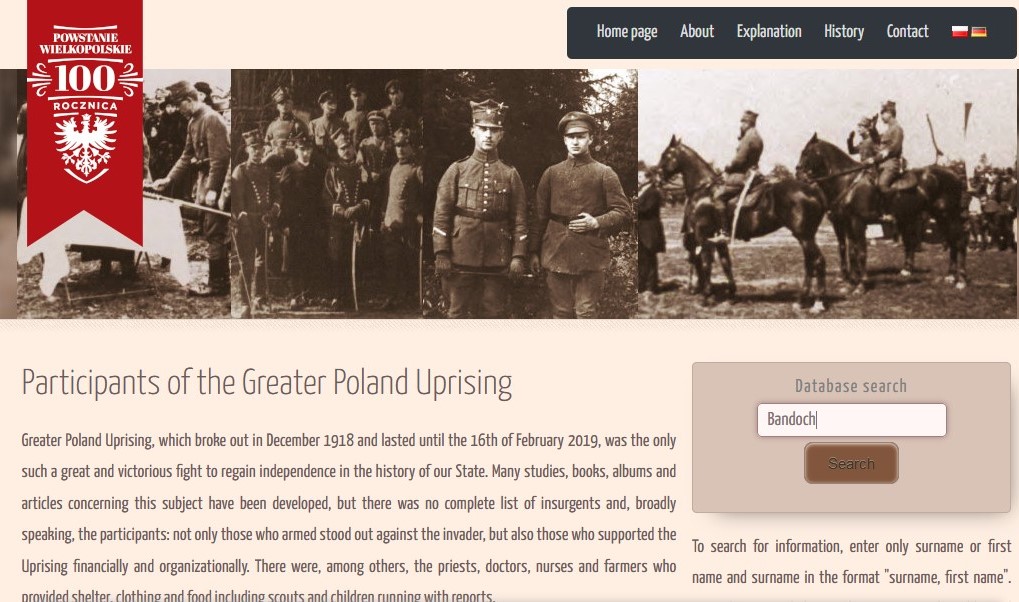
From a huge number of sources, scattered across many archives and other institutions, the Greater Poland Genealogical Society (Wielkopolskie Towarzystwo Genealogiczne) has created a database with biograms of Greater Poland insurgents.
The main search engine is on the home page.The database has English and German versions, both of the home page and search engines. Only the list of sources is always provided in Polish.
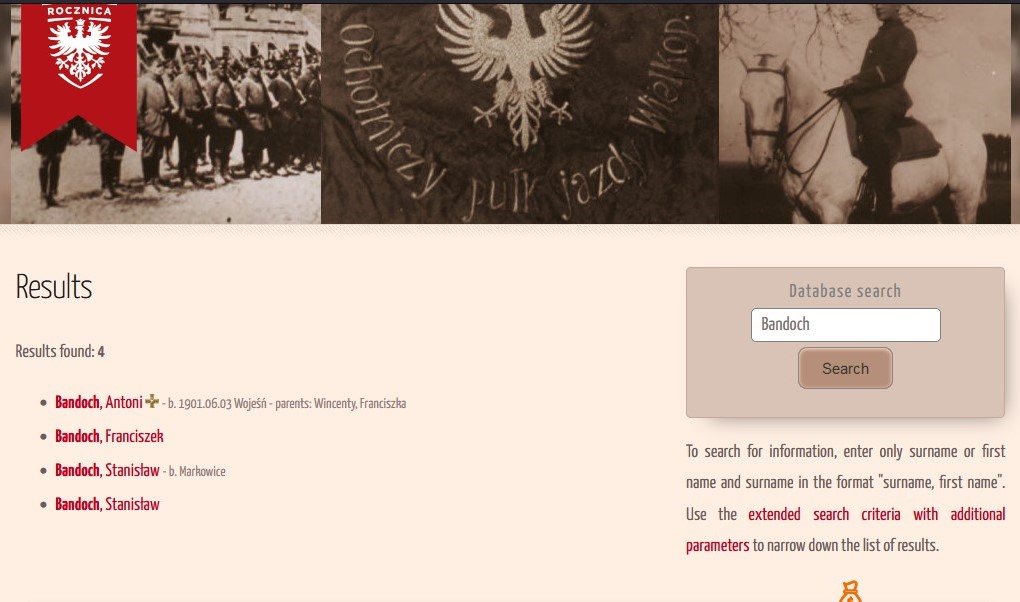
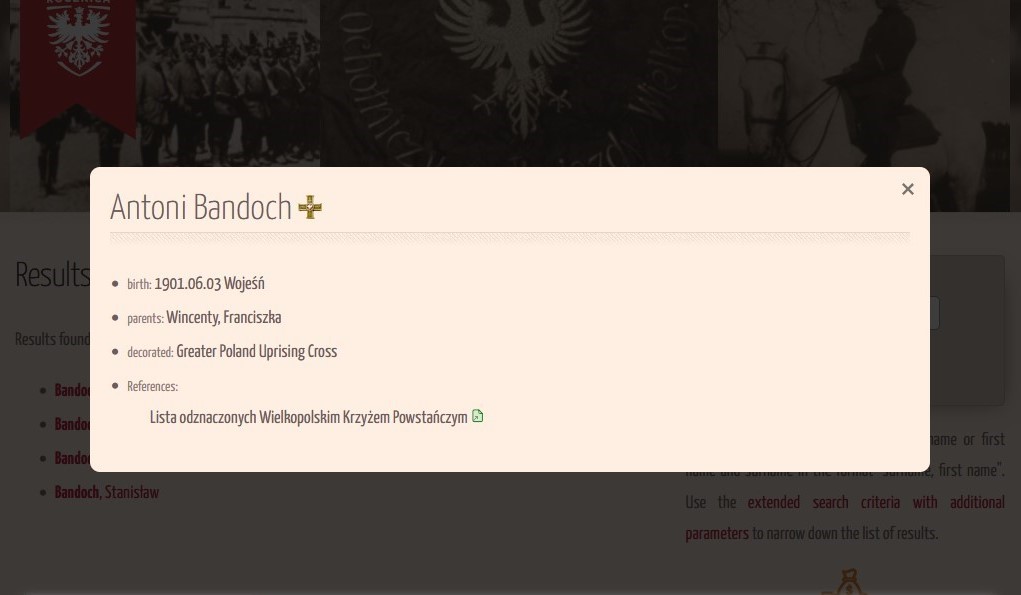
Most records there are biograms containing various information: parents’ details, place and date of birth, insurgent rank, places of participation in battles, distinction received, date and place of death.
For each record there is also a list of sources where the information comes from.
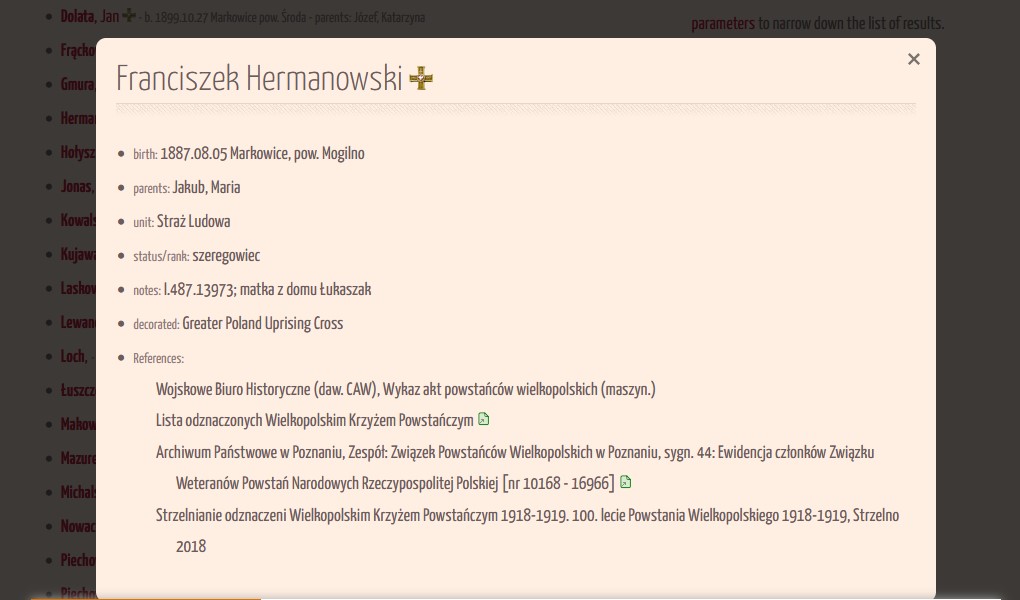
Links to websites are also provided if the source is available online. The authors rightly warn that access was possible on the date of entering the data into the database, so it should be taken into account that some links may not work. This applies especially to the website http://www.szukajwarchiwach.pl, which was replaced two years ago by www.szukajwarchiwach.gov.pl.
However, a detailed description is provided (archive, team name and archival unit name) that can be used to find the right scans.
I will present information on how to use and what it is useful for www.szukajwarchiwach.gov.pl after the indexing databases, because it is a large portal describes the resources of the Polish state archives.
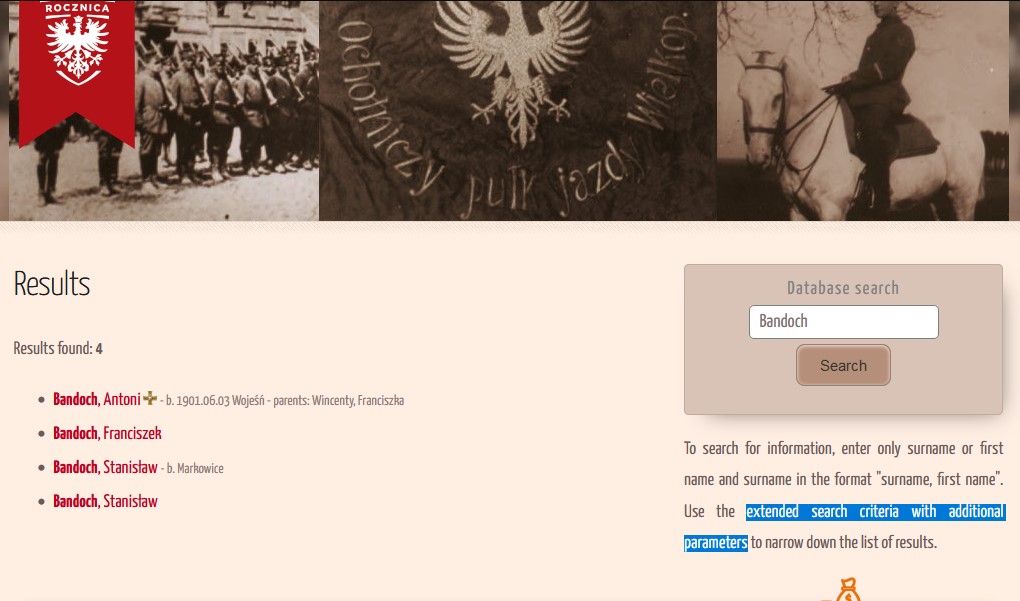
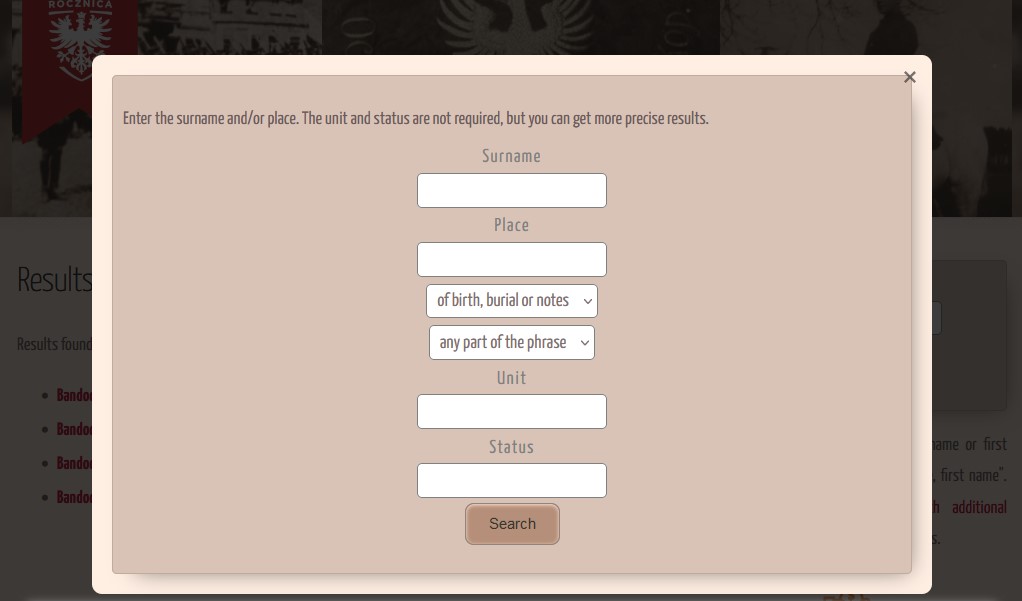
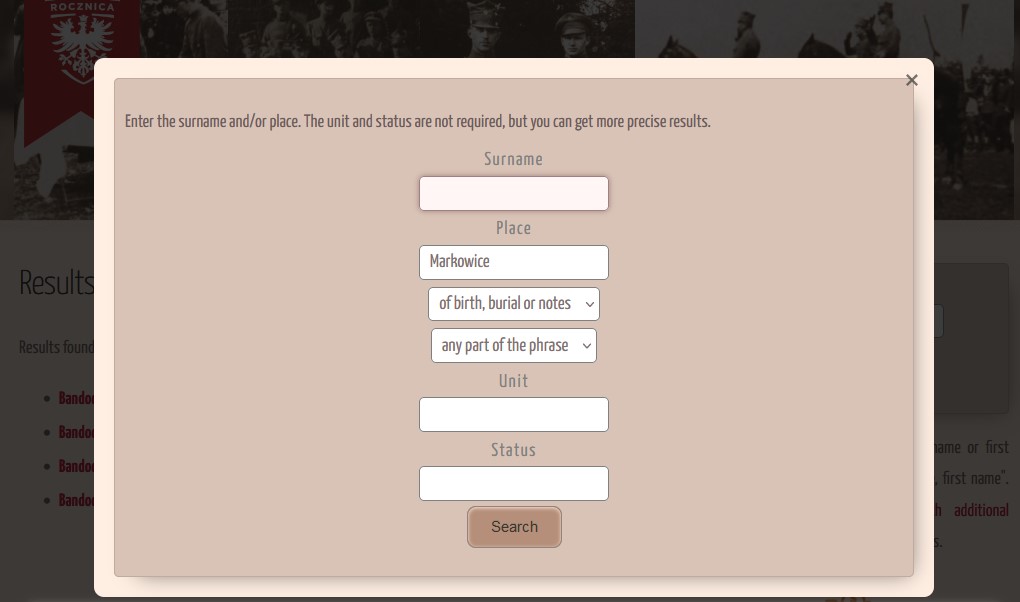
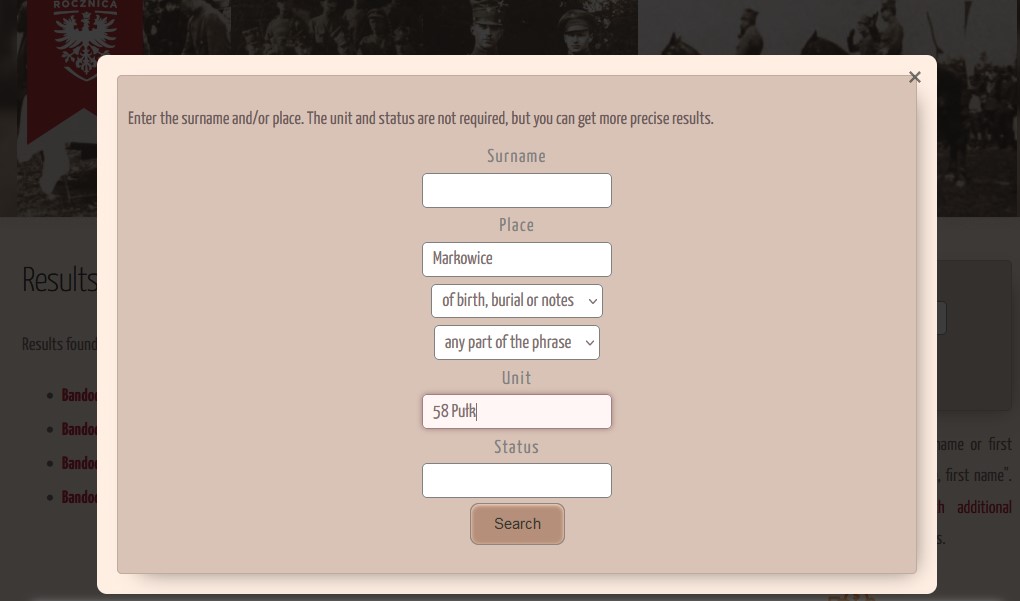

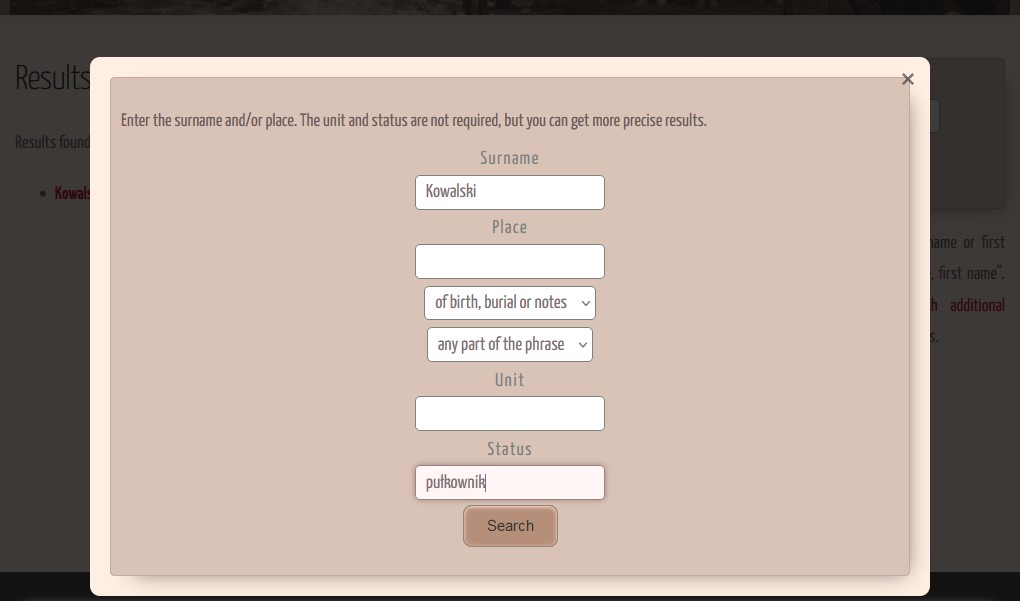
Below the simple search engine is also an entry to a more detailed one, where you can narrow down your criteria. It is possible to search by town and add the status and name of the insurgent unit. However, it should be remembered that these last two conditions only work when one of the first ones is filled in – name or place.
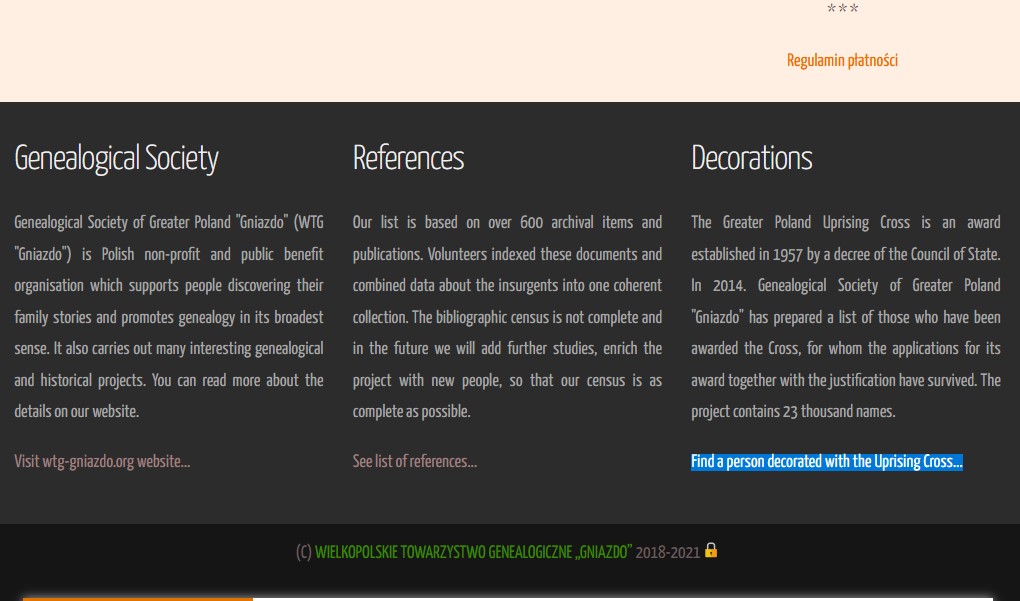
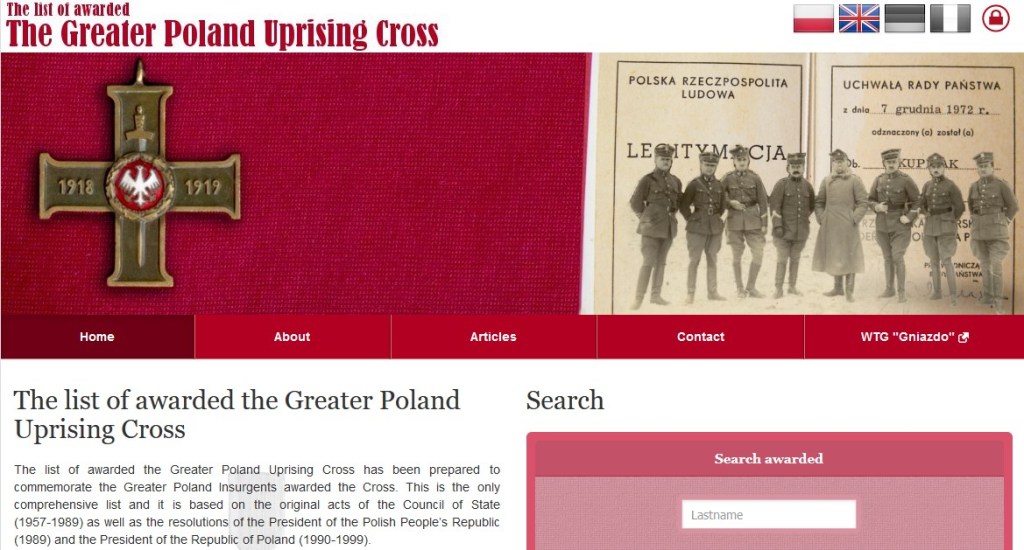
A database of people awarded the Insurgent Cross of the Greater Poland Uprising was added separately.
It is in the lower right corner of the home page. However, all people awarded the Cross of the Greater Poland Uprising are redirected to this collection in the main search engine. So it’s basically a repetition of data. In the main search engine, each honored person has a thumbnail of the award next to their surname.
The Greater Poland Insurgents database is one of the most complete thematic databases. If your ancestors lived before WWI in Greater Poland, Kujawy, Krajna, it is worth reading. You can find valuable information that allows you to find the older generation(s). In turn, the place of death of an insurgent after World War II may also be an indication of the place of residence of your relatives living in Poland.
A list of sources checked by genealogists can also be a valuable tip to next research.
If you are interested in finding ancestors in Poland, subscribe to this blog. Then you will not miss information that is useful to you.
Like this article and share it with your friends.
 ASK LIDIA